
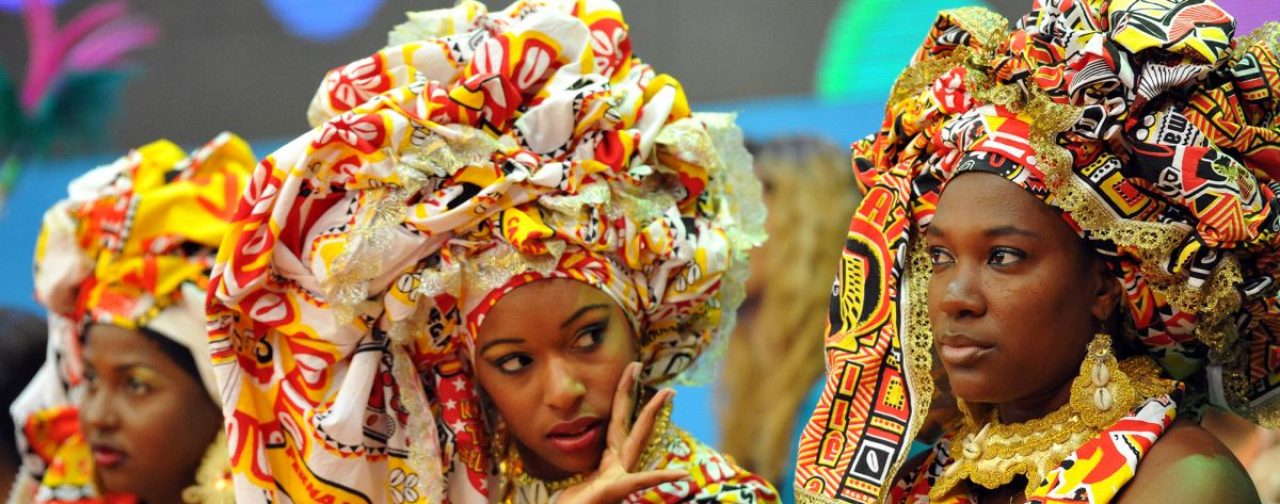
Bead
It is an adage in most Delta communities that, “anger hardly makes the king to destroy his beads, or tear them apart”. It is because beads are symbol of royalty, elegance, dignity and majesty. Research has also shown that bead has long been in Africa. Bead has various uses and of great importance to African culture and Delta State is not an exception. Bead has also been an article of trade from time immemorial. Its origin is chequered. It was also used as a medium of exchange. But, in recent times, the role of beads in Delta and other parts of Nigeria has unified the people in purpose, use and way of life of Delta people and Nigerians in general and alike.
In a recent interview conducted in Asaba, one of the prominent Chiefs averred when asked why kings and high personalities wear beaded caps. That people wear caps all over the world to protect their heads from dust, protect their skulls and selves from cold, wind and sunshine. But there is a great need to differentiate the caps, the crowns and coronets from ordinary caps and special caps. Some caps are beaded to show that the beaded ones belong to a special class. Possibly, the chiefs or the traditional rulers. But then, the caps will differentiate the status of the people, hence beaded caps or crowns are for certain status. The colour of the cap also shows its status.
The red cap will show certain status. The type of the bead or the cap also shows certain status, depending on the area, locality and tribe. These are the uses of beaded caps. When asked why some persons who do not belong to a particular status or class wear beads or caps which do not commensurate with their status. Our source also corroborates that the community has to assert certain amount of sanction and discipline the defaulters and then teach the inhabitants the culture of the people. For example, in a particular town people should know that this is their culture, this is the way people should behave. If you go outside and behave contrary or otherwise, you will be sanctioned by your community. Once people are sanctioned, once, twice or thrice, they will learn how to conduct themselves and stop abrogating the customs of the people, because if you destroy the culture of the people you are saying that you do not belong to any place. It is the culture that differentiates a group of people from another. People should respect their culture.
Again, in burial ceremony in Anioma, the people use Ehulu (beads). Ehulu is the biggest beads. The traditional rulers use Ehulu. They are small and big ‘Ehulu’. The distinguishing fact is the title of the users. Beads were extremely important in those days that is why we say beads are sacred and they never die. For example, if a traditional ruler dies, he is decorated with beads. One of the beads is kept in his mouth for accessibility and historical dating or used as radio carbon dating. So that when the person decays, the bead will not decay and when you happen to exhume the body many years after, the bead will still remain, to know this is where the head lies
It should be noted that in some societies, it is a must that if you are a traditional ruler or king, you must have beads. Even when the king dies the beads remain. And in some cultures, when the king dies, he is buried in a sitting position and with beads in the coffin.
Wearing of bead is one of the common characters among all culture if not all.it functions as money, the possess power, they indicate wealth, they are spiritual talismans, and it use to send some coded messages.
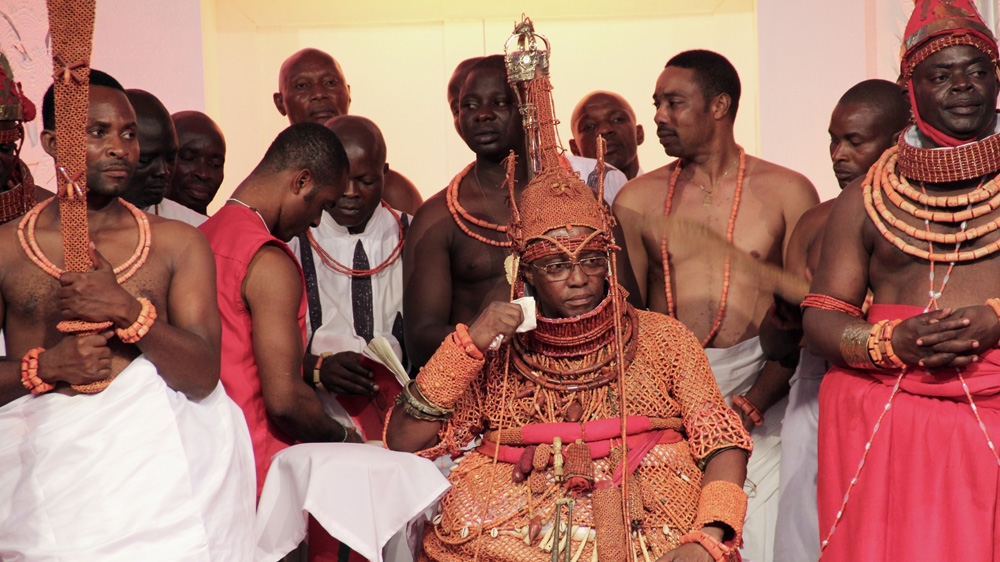
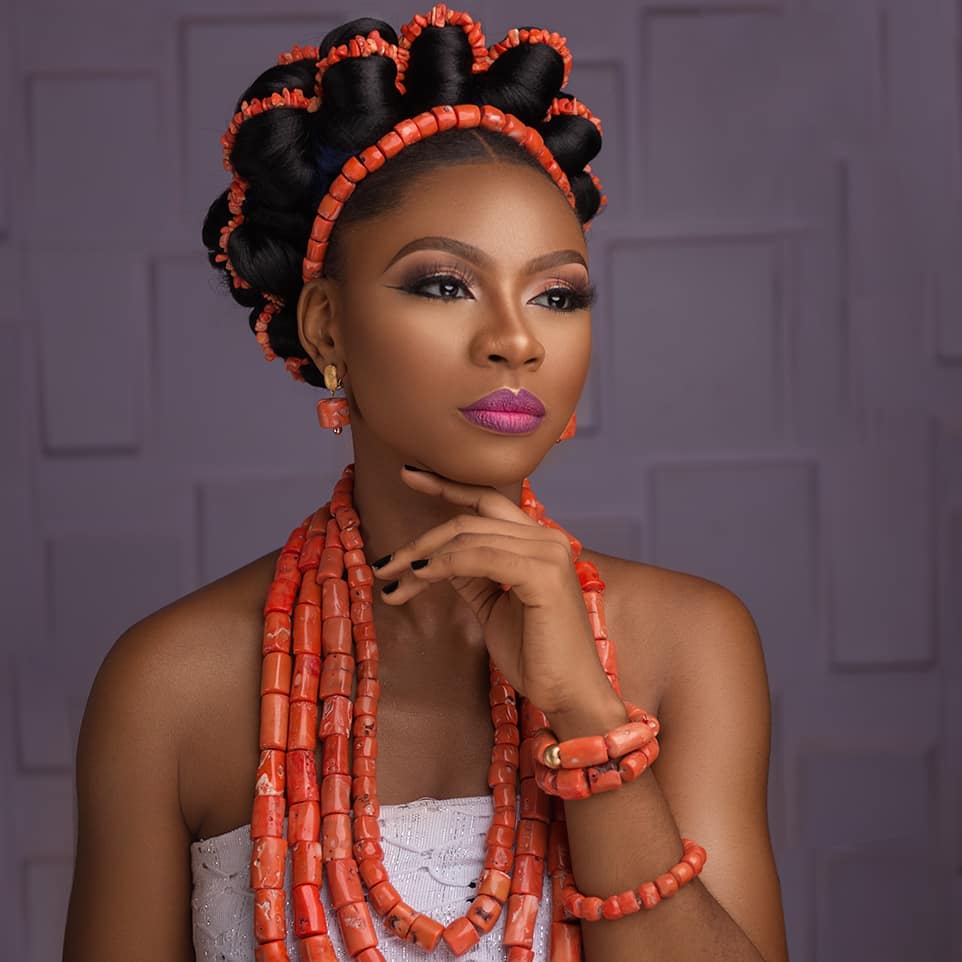
The Benin’s, Urhobo’s and some other parts of the Edo/Delta have a common name for coral bead, they call it Ivie. Coral bead as ornament, is held in high esteem and valued like diamond among the people of this region and the country at large especially during traditional marriage. Even the Yoruba’s and Ibos uses coral beads as insignia of royalty too. The extent of its value gave rise to the parable in Benin “Aiye Ivie rhuemwin oya”. This simply means, beads are not used as instrument of dishonour. On this edition we shall be looking at Coral Beads as An Ideal Bridal Costume in the Benin tradition. ins, Urhobo’s and some other parts of the Edo/Delta have a common name for coral bead, they call it Ivie. Coral bead as ornament, is held in high esteem and valued like diamond among the people of this region and the country at large especially during traditional marriage. Even the Yoruba’s and Ibos uses coral beads as insignia of royalty too. The extent of its value gave rise to the parable in Benin.
Benin kingdom has been known to have very significant role for coral beads. They have mainly two kind of bead, IVIE and EKAN. They are both member of coral beads family. Coral beads are from of stones in oceans and polished to jewellery. Ivie is a specie of coral beads, an important type of jewellery worn by Edo chiefs. Ektan looks like a stone and it beautiful in look.
Benin kingdom has been known to have very significant role for coral beads. They have mainly two kind of bead, IVIE and EKAN. They are both member of coral beads family. Coral beads are from of stones in oceans and polished to jewellery. Ivie is a specie of coral beads, an important type of jewellery worn by Edo chiefs. Ektan looks like a stone and it beautiful in look.
 CULTURE WIND