
Traditional Festivals
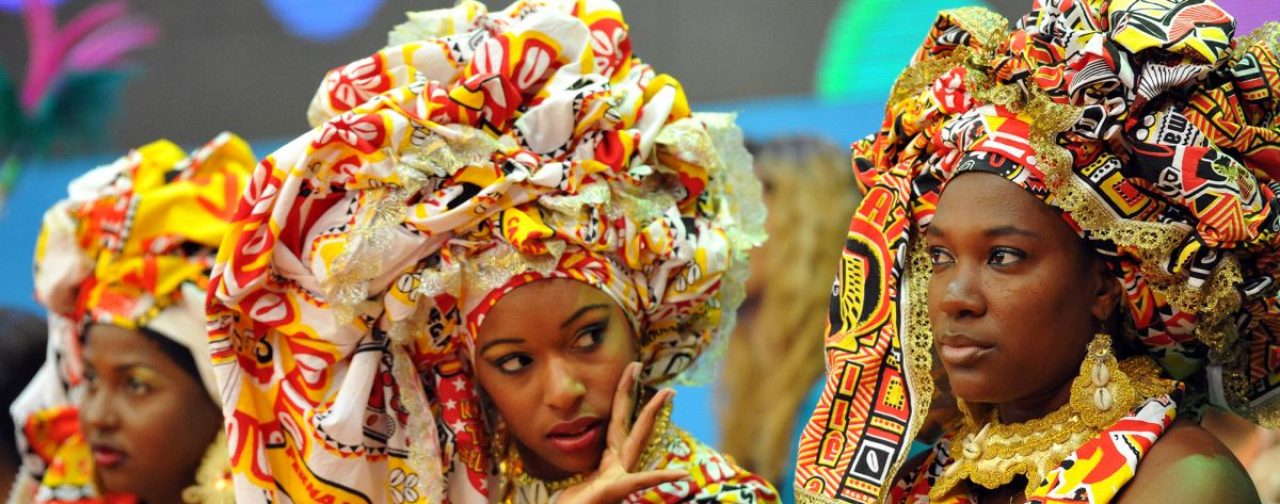
There are about 70 major annual traditional festivals in Ghana, celebrated either to memorialise harvest seasons (the most common type, usually after the rainy season), migration or territory expansion history, stool cleansing and more. Such events consecrate family and communal bonds, while extolling the colourful cultures and instilling spirituality of the people.
Homowo – May
Homowo is one of the grandest festivals in Ghana and it happens right in the capital, Accra, every year in May. Its history is one of a season of despair due to famine, which was eventually followed by a bumper harvest of plant food and fish, as such homowo – referring to the act of ‘hooting at hunger’. The chiefs of the Ga Traditional space sprinkle kpokpoi; a special dish prepare din the streets, made from cornmeal and palm oil. There is folk singing, libation pouring and litanies said to the gods for another sound season.
Aboakyir – May
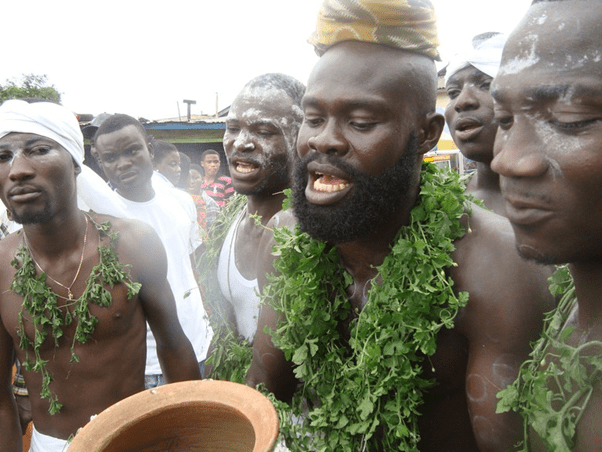
Effutu-Winneba people observe Aboakyir, literally meaning ‘game catching’, every first Saturday in the month of May. Two Asafo groups, Tuafo and Denkyefo, go on a procession into the forest for a competitive deer hunt (formerly a leopard hunt), after which rituals are done to pacify the gods This is followed by a grand durbar with the chiefs, queen mothers and elders to vivify the ceremonial and cultural experience.
Bakatue – July
Bakatue, celebrated by the people of Elmina, symbolizes the ‘process of discharge’ as the Benya Lagoon becomes one with the sea to commence the fishing season. There are a lot of activities significant of honouring the deities – who are the agencies of reinforcement of the fishing community. One is the ‘net casting’ ceremony, where the catch is offered to the gods. It is celebrated annually in Elmina on the first Tuesday in July. A splashy durbar of chiefs and people amid drumming and dancing, as well as a hued display of canoes on the lagoon mark the celebrations.
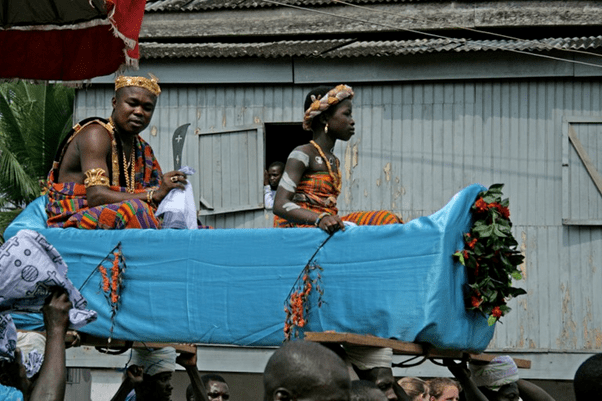
Asafotufiam – August
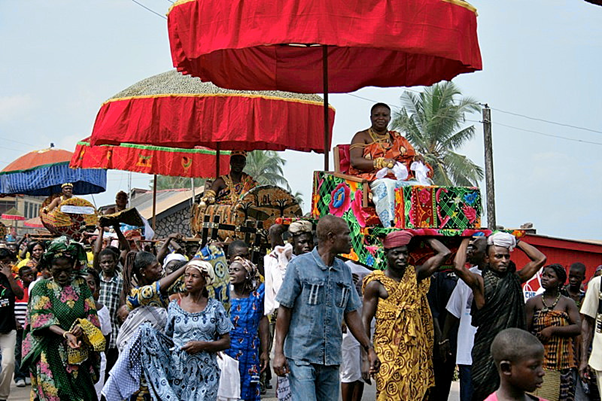
From the end of July to early August, the people of Ada in the eastern parts of the Greater Accra region commemorate victories and defeats in past clashes with Asafotufiam. Also, to usher in the harvest season, ceremonial formalities are observed. There is a mock battle performance with elegant costumes, stool cleansing rituals and libation, durbars amid processions with chiefs in palanquins, and music and dance involving men and women adorned in variegated beads.
Oguaa Fetu Afahye – September
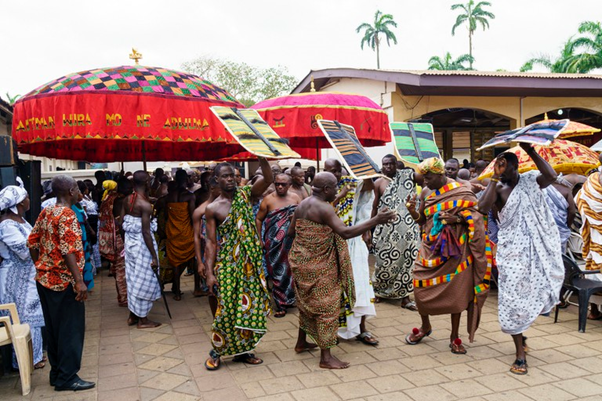
Visit Fetu Afahye in early September in Cape Coast for the unique durbar and warrior group (asafo) processions. Ritual functions are observed such as libation and slaughter of livestock, to show appreciation to the 77 deities in the area. Just like in the Ga Traditional area, there is a ban on drumming, music and noise-making prior to the occasion. Also, fishing in the Fosu lagoon is paused. Alongside drumming and dancing by women, there are men and children clad in kente, gold ornaments and processions by chiefs and elders in palanquins bearing large umbrellas and scepters on the grand days. The Amuntumadeze (health day) and Adamma (rituals day) are also observed.
Hogbetsotso – September
The Anlo Ewes escaped from the reign of terror by ruler Agorkoli to Notsie by walking backwards to evade their pursuers. To commemorate this exodus, Hogbetsotso is celebrated every September. It is also a peace-making opportunity to resolve qualms, aside stool purification and environmental sanitation exercises.
Akwasidae – Once every six weeks
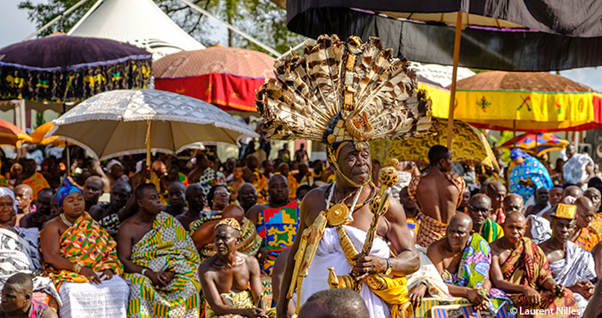
Manhyia Palace opens its doors to all and sundry during the special Sunday cultural experience called Akwasidae. The Ashanti kingdom boasts of intricately structured customs to strengthen the bonds among queen mothers, chiefs, sub-chiefs, elders and the people. The palanquin lift goes with horn sounds and fontomfrom thumps, and the kete or adowa dancing makes the colourfully adorned kente with gold trinkets an intriguing spectacle.
Music, Food and Art Festivals
CHALE WOTE Festival
The vibrant CHALE WOTE Street Art Festival, which gathered over 30,000 people last year, marks exchanges between Ghana-based artists/educators and international cronies in Accra’s streets. The multi-disciplinary community-based experience takes place in Jamestown; one of Accra’s most historic communities used as a port for movement, sales and confinement during days of exploitation and systematization of colonialism. It is such a refreshing, alternative platform to reconnect with intuitive concepts engineered for free form call-and-response expressions through performance, conversations and extensions of culture. The seventh annual CHALE WOTE Street Art Festival takes place in Accra, Ghana from August 14th to 20th, 2017 on the theme: Wata Mata, the final installment of the trilogy (others being African Electronics and Spirit Robot).
FOLKMOOT DANCE IN GHANA
Nkrabea is one of the most powerful and entertaining cultural groups performing in Africa today. The group is filled with young, talented Ghanaians who are, by any standards, dedicated to and passionate about what they do.
Founded in 1995 and affiliated to the Centre for National Culture and a member of the Ghana Dance Association, the group has 25 energetic youthful members, ranging in age from 18 to 30.
Folkmoot festival goers can befriend them on Facebook ahead of their visit and check out performances on YouTube! (just like below…)
They are well rehearsed in African traditional drumming and dancing, contemporary dances, folk music, acrobatics display, fire eating, stilt dancing and more.
The group has performed for visiting international dignitaries to Ghana, including Former World Bank President, Mr. James Wolfensohn, Former U.S-President Bill Clinton, Former U.N Secretary General, Dr. Kofi Annan and other high profile visitors.
The group has since its establishment insisted on high discipline, dedication, focus and passion with very little income that only comes by way of spontaneous donations from appreciative individuals. Somehow, the group has managed to carry itself on the strength of shared passion of its members to educate and entertain the world through African culture.
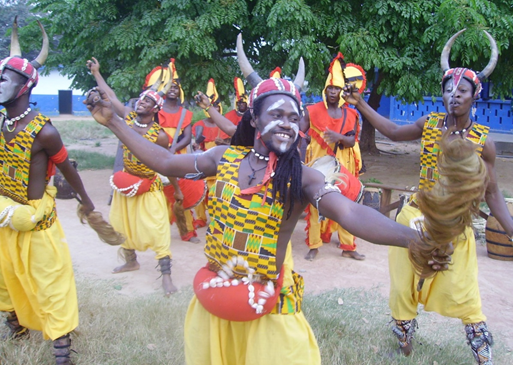
The performance of the group is mostly dance-oriented and culturally contextualized. Each dance is ceremonial and represents an African celebration, often showcasing or invoking certain colorful ancestral practices.
The costumes are as dazzling as the dances and lend authenticity and originality to the overall performance. Beyond songs, costumes and dances, there are captivating physical feats that make the performance of the group appreciatively dimensional.
 CULTURE WIND